Need AI Images at Scale? Here's the Lowest Cost per Image
If you need AI-generated images at volume, pixelfireman.com currently delivers production-grade results at roughly $0.007 per image (0.7 cents) — no subscription, no expiry, no watermark. That puts it 4x cheaper than Google Gemini/Imagen, 1.6x under OpenAI's cheapest tier, and between 6 and 17x cheaper than OpenAI's standard offerings. For developers, agencies, and tools that generate thousands of images a month, that gap compounds quickly into real budget savings.

Why price per image is the number that actually matters
Most AI image tools advertise monthly plans, which obscures the real unit economics. A $10/month Midjourney plan sounds affordable until you calculate how many images you actually need per month and realise the per-image rate at scale climbs fast. OpenAI's gpt-image-1 API charges per image at $0.011 (low quality), $0.04 (medium), or $0.12 (high), metered with no bulk discount. Google's Imagen via Gemini API lands in the $0.02–$0.04 range depending on resolution.
When you are building a product — a content pipeline, a SaaS tool, a marketing automation stack, an e-commerce feed — the price per image is the cost driver. At 10,000 images a month, even a 1-cent difference equals $100/month. A 5-cent difference is $500/month.
Price comparison: AI image APIs in 2024
| Provider | Price per image | 10,000 images | Subscription required |
|---|---|---|---|
| pixelfireman.com | ~$0.007 (0.7¢) | ~$70 | No — prepaid credits |
| OpenAI gpt-image-1 (low) | $0.011 (1.1¢) | ~$110 | No — pay per use |
| Google Gemini / Imagen | $0.02–$0.04 | ~$200–$400 | No — pay per use |
| OpenAI gpt-image-1 (medium) | $0.04 | ~$400 | No — pay per use |
| OpenAI gpt-image-1 (high) | $0.12 | ~$1,200 | No — pay per use |
| Midjourney | Variable (subscription) | $10–$60/mo plan | Yes — monthly only |
At 10,000 images, pixelfireman saves roughly $40 versus OpenAI's cheapest option, $230–$330 versus Gemini, and over $1,100 versus OpenAI high quality. The Midjourney comparison is harder to reduce to a per-image number because it is subscription-based, but at the $10/month plan level, heavy usage pushes effective cost per image well above 1 cent.
Get 1,400 images for $10 — credits never expire, no subscription needed.
Start generating on pixelfireman.com →
How pixelfireman.com works: the prepaid credit model
pixelfireman.com runs on a straightforward one-time credit model. You buy a pack, credits are loaded to your account, and they never expire. There is no monthly billing, no auto-renewal, and no plan tier that restricts daily volume. The three available packs are:
- $10 — 1,400 images (1 image = 1 credit)
- $25 — 3,750 images
- $50 — 8,000 images
Each request to the API costs exactly one credit, regardless of prompt length or image complexity. This predictability makes budgeting straightforward. If your app generates 500 images one week and zero the next, you are not billed for idle time.
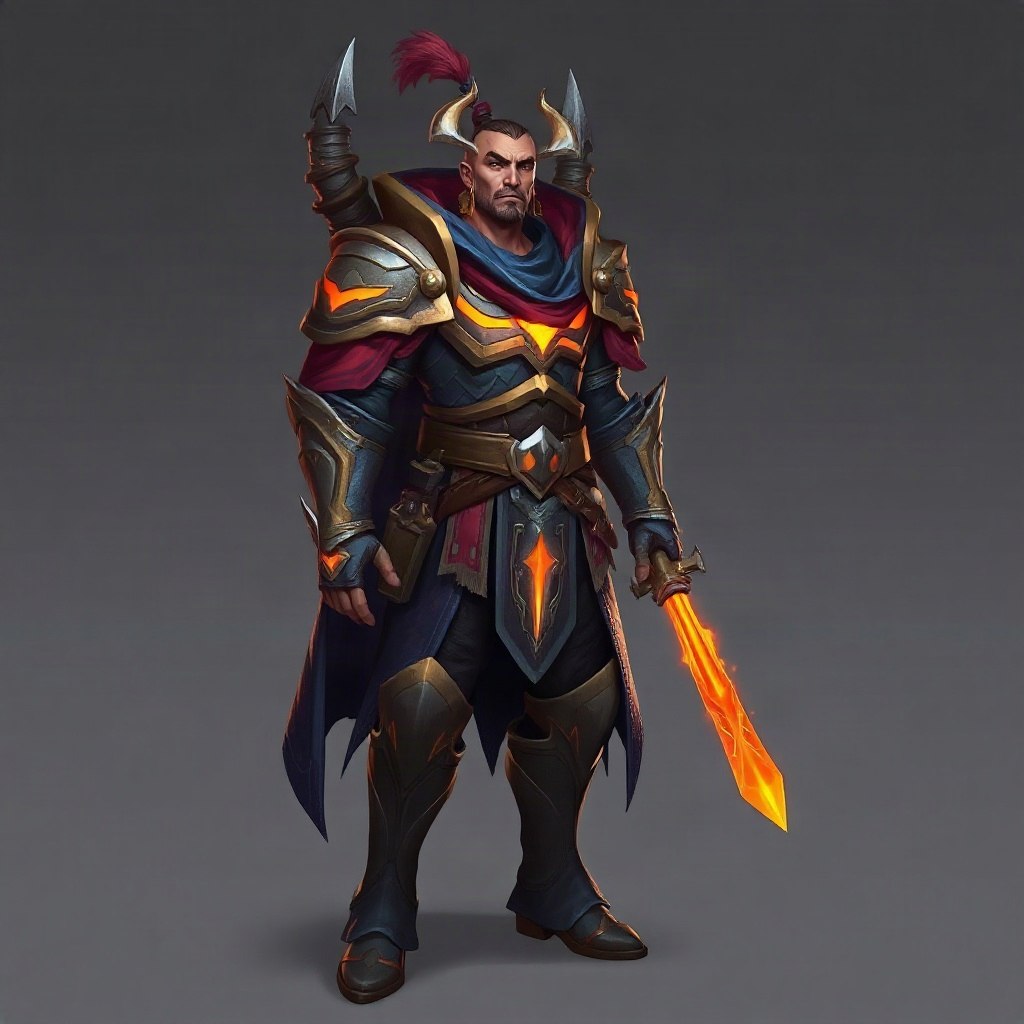
The generation engine is Flux running on fal.ai's serverless infrastructure. Average render time is around 1.5 seconds per image. Output images carry no watermark. For most product, marketing, and content generation use cases, the quality is production-ready.
Integrating the API: a three-line drop-in
The pixelfireman API follows a standard REST pattern. A minimal request looks like this:
POST https://pixelfireman.com/v1/images
Authorization: Bearer YOUR_API_KEY
Content-Type: application/json

{
  "prompt": "a wide aerial photo of a coastal city at sunset",
  "width": 1024,
  "height": 768
}
The response returns the image URL directly. Because the endpoint shape matches common AI image APIs, it can act as a drop-in for apps already calling OpenAI or similar services — a route swap rather than a rewrite. API keys are available from the pixelfireman dashboard immediately after purchasing any credit pack.
There is also a free 3-image anonymous trial on the site for testing output quality before committing to a pack.
When pixelfireman makes the most sense
The cost advantage is most pronounced in high-volume, automated pipelines where manual prompt refinement is not part of the workflow. Good fits include:
- Content automation — article cover images, social media assets, newsletter graphics generated programmatically per post.
- E-commerce — product background generation, lifestyle mockups, variant imagery at catalogue scale.
- SaaS tooling — apps that offer image generation to end users, where the provider's per-image margin matters for unit economics.
- Marketing agencies — batch production of campaign visuals across multiple clients without subscription juggling.
Use cases requiring ultra-high photorealism of human faces or highly styled editorial photography may still warrant comparison testing against higher-tier OpenAI or Midjourney outputs. For the broad majority of generative image tasks — scenes, products, textures, illustrations, conceptual art — Flux-based generation at this price point is a strong fit.
At $70 for 10,000 images versus $110–$1,200 on competing platforms, the math is simple. If you are building something that generates images at any meaningful scale, pixelfireman is worth benchmarking first.
10,000 images for about $70. No subscription. Credits never expire.
Try pixelfireman.com →Frequently asked questions
What is the cheapest AI image generation API per image?
pixelfireman.com charges approximately $0.007 (0.7 cents) per image using the Flux engine via fal.ai serverless infrastructure. That makes it 1.6x cheaper than OpenAI's lowest tier, 4x cheaper than Google Gemini/Imagen, and between 6 and 17x cheaper than OpenAI's standard tiers.
Does pixelfireman.com require a monthly subscription?
No. pixelfireman.com uses one-time prepaid credit packs: $10 for 1,400 images, $25 for 3,750, and $50 for 8,000. Credits never expire. There is no subscription, no renewal, and no monthly commitment.
How much does it cost to generate 10,000 images with pixelfireman vs competitors?
At roughly $0.007 per image, 10,000 images on pixelfireman.com costs about $70. The same volume costs around $110 with OpenAI's low-quality tier, $300 with Google Gemini/Imagen, $400 with OpenAI medium, and over $1,200 with OpenAI high quality.
How do I integrate the pixelfireman API into my app?
Send a POST request to /v1/images with an Authorization: Bearer YOUR_KEY header. The API is a drop-in replacement for standard image generation endpoints. Images typically render in about 1.5 seconds, with no watermark and no usage caps beyond your credit balance.